A Framework in Cognitive Archaeology

Deep
Symbolic
Systems
Model

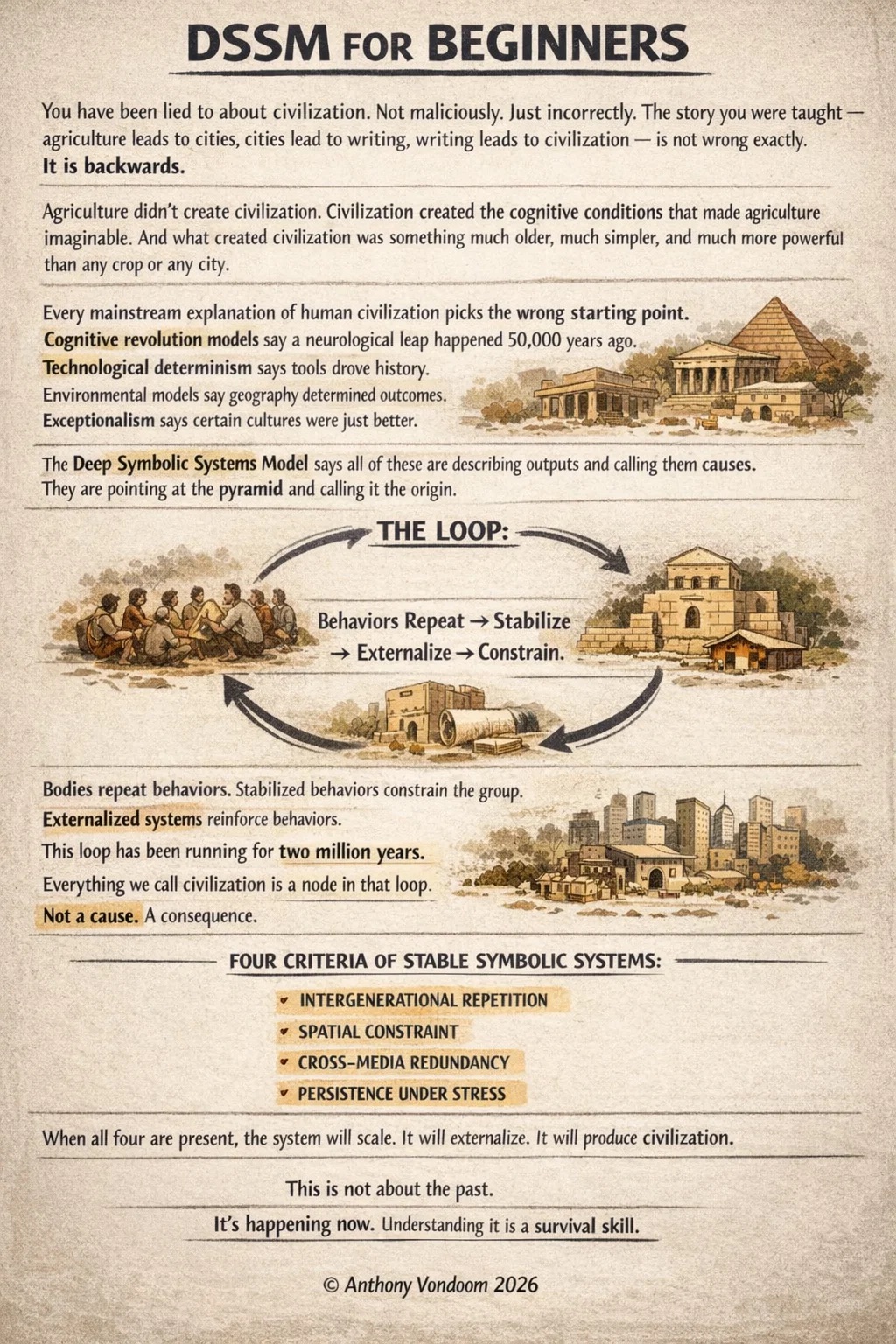
Civilization does not begin with monuments or writing. It begins with the recursive stabilization of embodied practices into durable symbolic systems across generations.

DSSM CORE I Embodied Familiarity II Cognitive Offloading III Institutional Emergence IV Monumental Externalization
Scroll
0Papers published
0Civilizations mapped
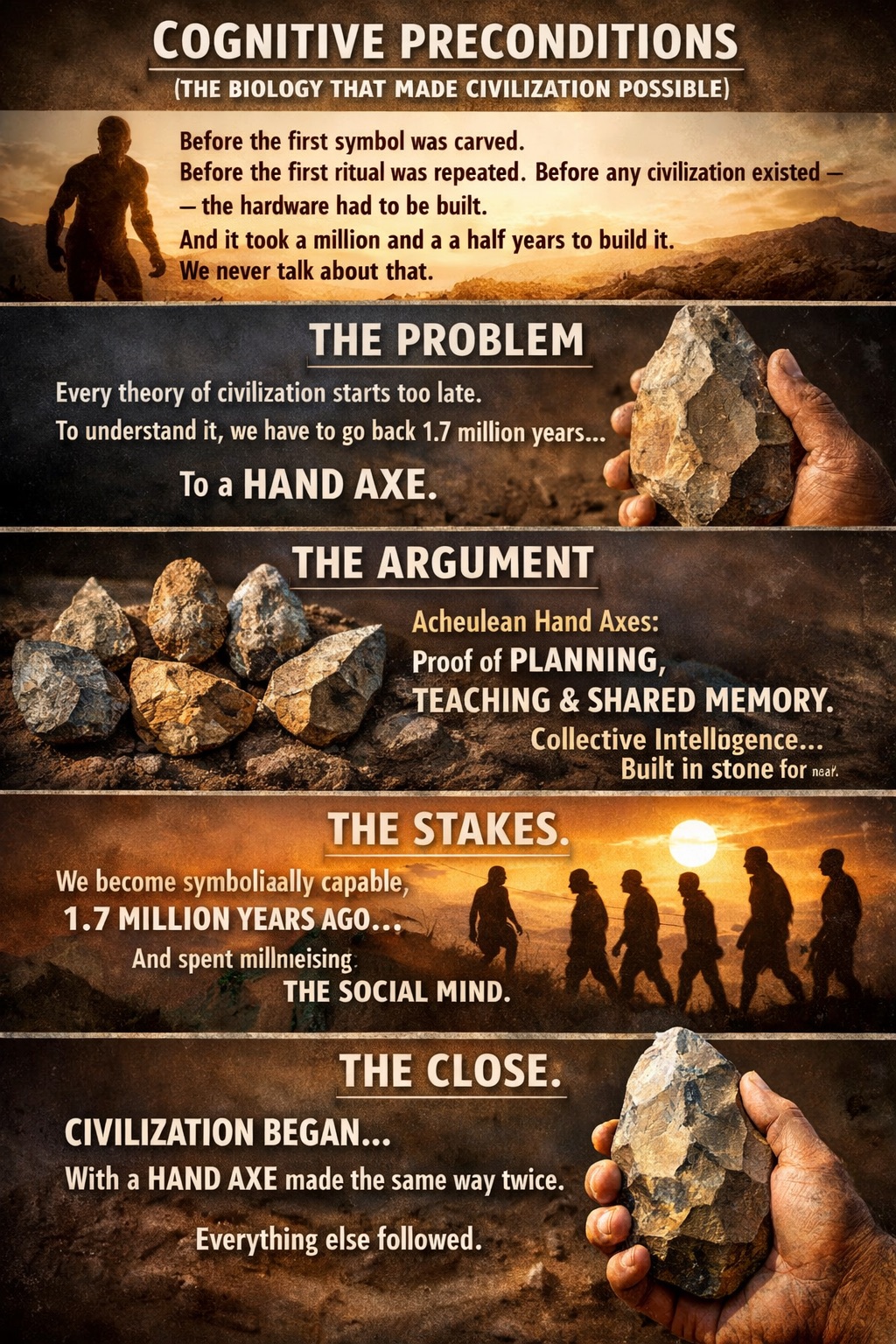
1.5MYears of symbolic record
0FCP observables
01

The Thesis

"Monumentality and writing are late-stage externalizations of pre-existing symbolic load — not origins."

The standard account of civilization runs something like this: agriculture leads to surplus, surplus enables specialization, specialization produces writing and monuments, and civilization follows. The DSSM disputes the sequence — not the facts, but what they explain.

Writing and monuments do not cause symbolic complexity. They record it. The real cognitive infrastructure is built long before any stone is cut or tablet inscribed — through repeated ritual, spatial constraint, cross-media redundancy, and the intergenerational transmission of embodied practice.

The DSSM identifies four criteria for symbolic stabilization: intergenerational repetition, spatial constraint, cross-media redundancy, and persistence under stress. When these criteria are met at scale — around a threshold of approximately 500 individuals — symbolic systems begin to calcify into institutions. The pyramid is the receipt, not the invention.

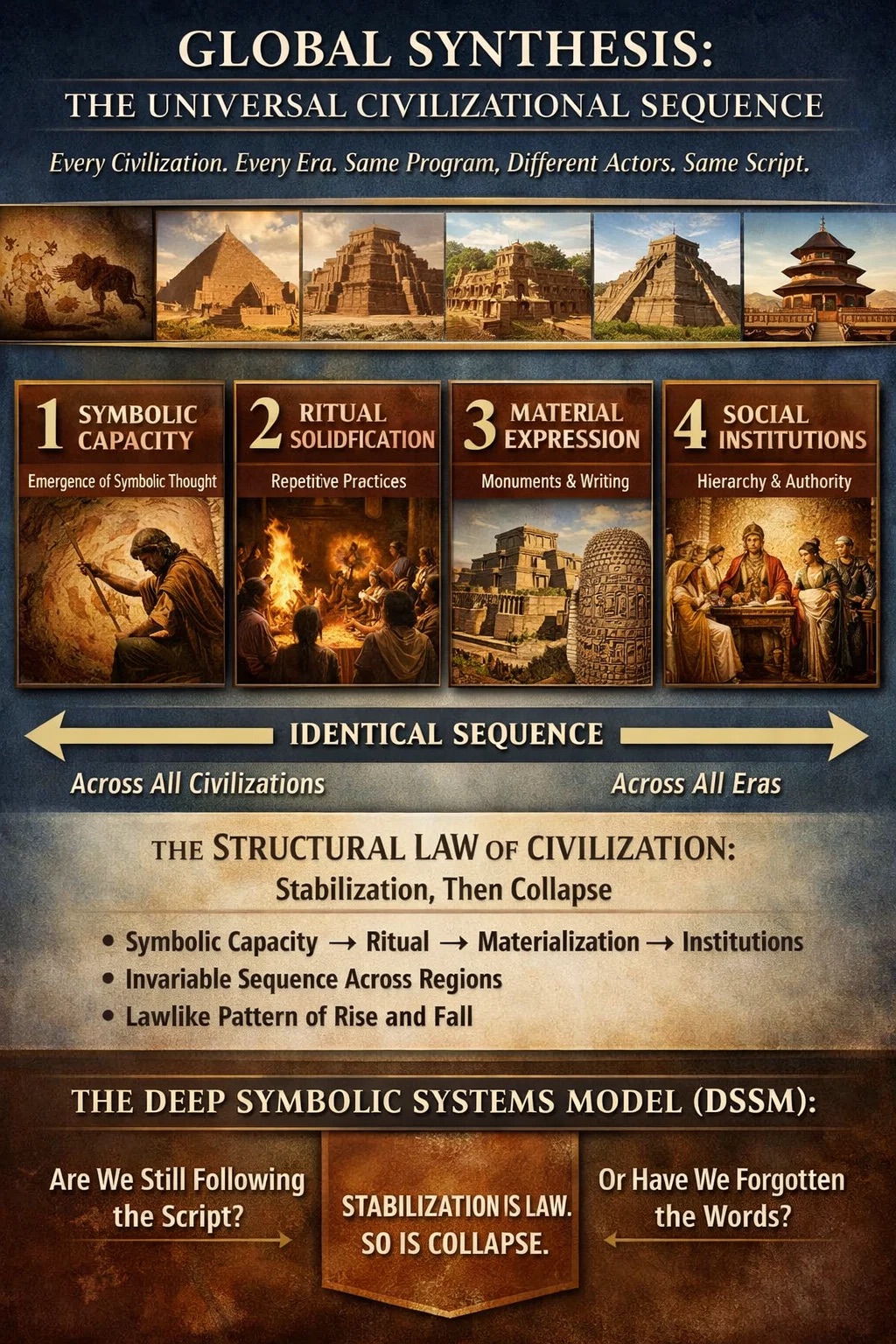
This framework applies consistently across Egypt, Mesopotamia, East Asia, the Indus Valley, and Mesoamerica — each through a distinct stabilization pathway, each arriving at institutional emergence through different material substrates but the same underlying symbolic logic.

02

Four Stages

01
Embodied Symbolic Familiarity
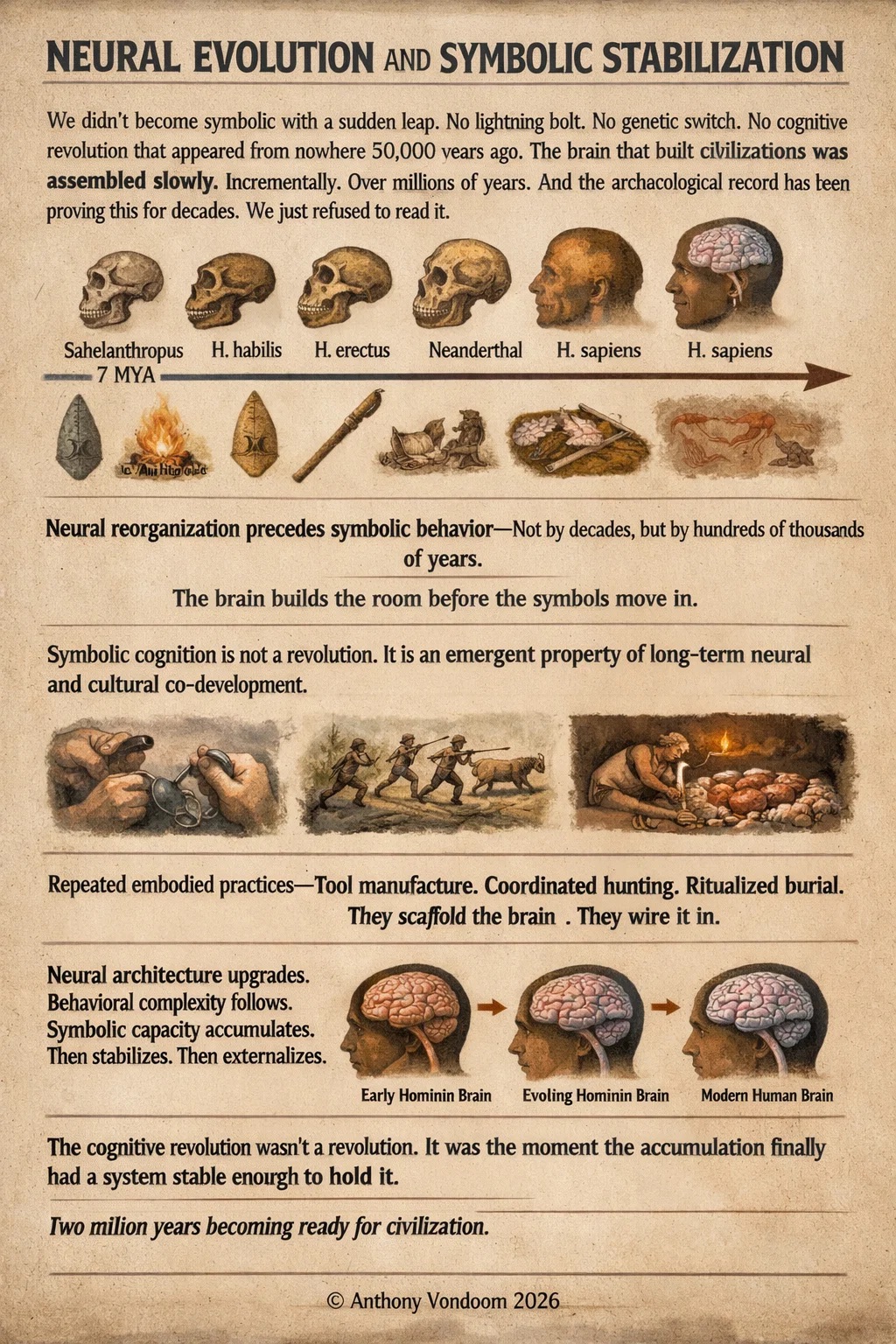
Repeated gestures, spatial orientation, and embodied ritual form the earliest symbolic substrate. Pre-linguistic, pre-monumental, but structurally significant.
Origin substrate
02
Cognitive Offloading
Symbolic load distributes into objects, spaces, and bodies. Memory externalizes into the environment. The world becomes a mnemonic architecture.
Distributed memory
03
Institutional Emergence
At ~500 individuals, symbolic systems cross a stabilization threshold. Protocols calcify. Repeated practice becomes enforced structure.
Threshold ~500 individuals
04
Monumental Externalization
Writing, architecture, and codified law emerge as visible outputs — late-stage crystallizations of symbolic infrastructure already millennia in the making.
Late-stage output
03

Saturation Timelines

Egypt
Axial-River / Stone-Anchor pathway
~12,500 BCE
Mesopotamia
Axial-River / Stone-Anchor pathway
~8,000 BCE
East Asia
Portable / Craft-based pathway
~6,000 BCE
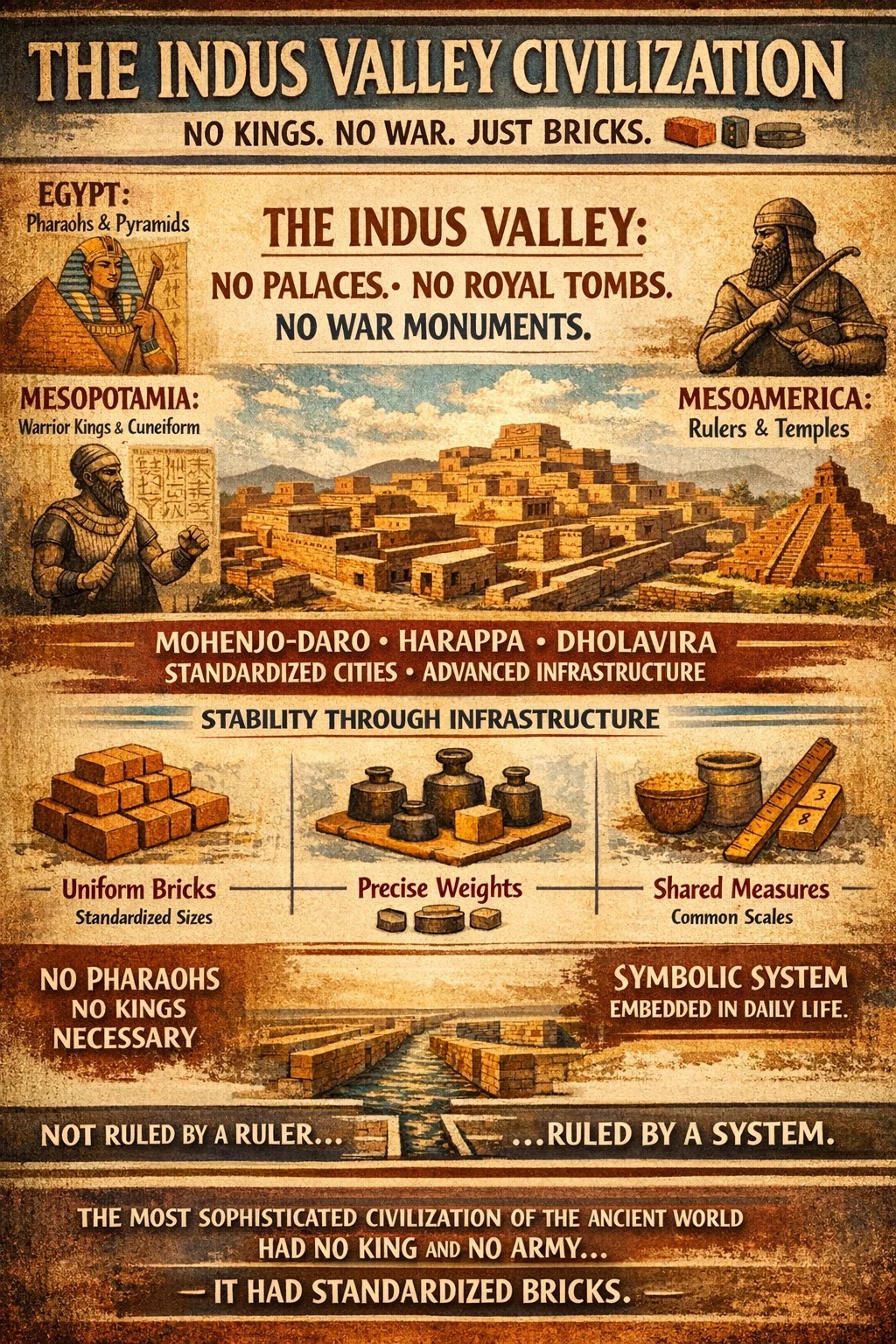
Indus Valley
Infrastructural Embedding pathway
~5,500 BCE
Mesoamerica
Distributed / Network pathway
~4,000 BCE
Negative cases
Australia (deliberate equilibrium) · Sub-Saharan Africa (Stage III absent) · Late Neolithic Europe (partial, delayed)
Symbolic saturation depth — relative BCE scale
Egypt
~12,500 BCE
Mesopotamia
~8,000 BCE
East Asia
~6,000 BCE
Indus Valley
~5,500 BCE
Mesoamerica
~4,000 BCE
04

Field Companion Protocol

🏛
Mnemonic Architectures
Spaces structured to encode and transmit social or cosmological knowledge across generations.
Symbolic Stabilization
Evidence of recurring symbolic forms persisting across time, media, and context.
Externalized Cognition
Material evidence of memory distributed into objects, landscapes, and bodies.
Symbolic Regulation
Symbolic systems used to govern behavior, allocate resources, or enforce social norms.
Distributed Authority
Symbolic power distributed across roles, spaces, or objects rather than concentrated in a single actor.
Portable Symbolic Anchors
Transportable objects carrying symbolic load — enabling mobile transmission of the system.
Each observable scored 0–2 across two independent axes: Evidence Strength (E) and Symbolic Specificity (S). Saturation requires ≥ 7/8 with no criterion at zero. Final score = min(E, S). Neither axis can inflate a weak result in the other.
05

Visual Research

Research posters and illustrated explainers from the DSSM corpus. Click any to expand.
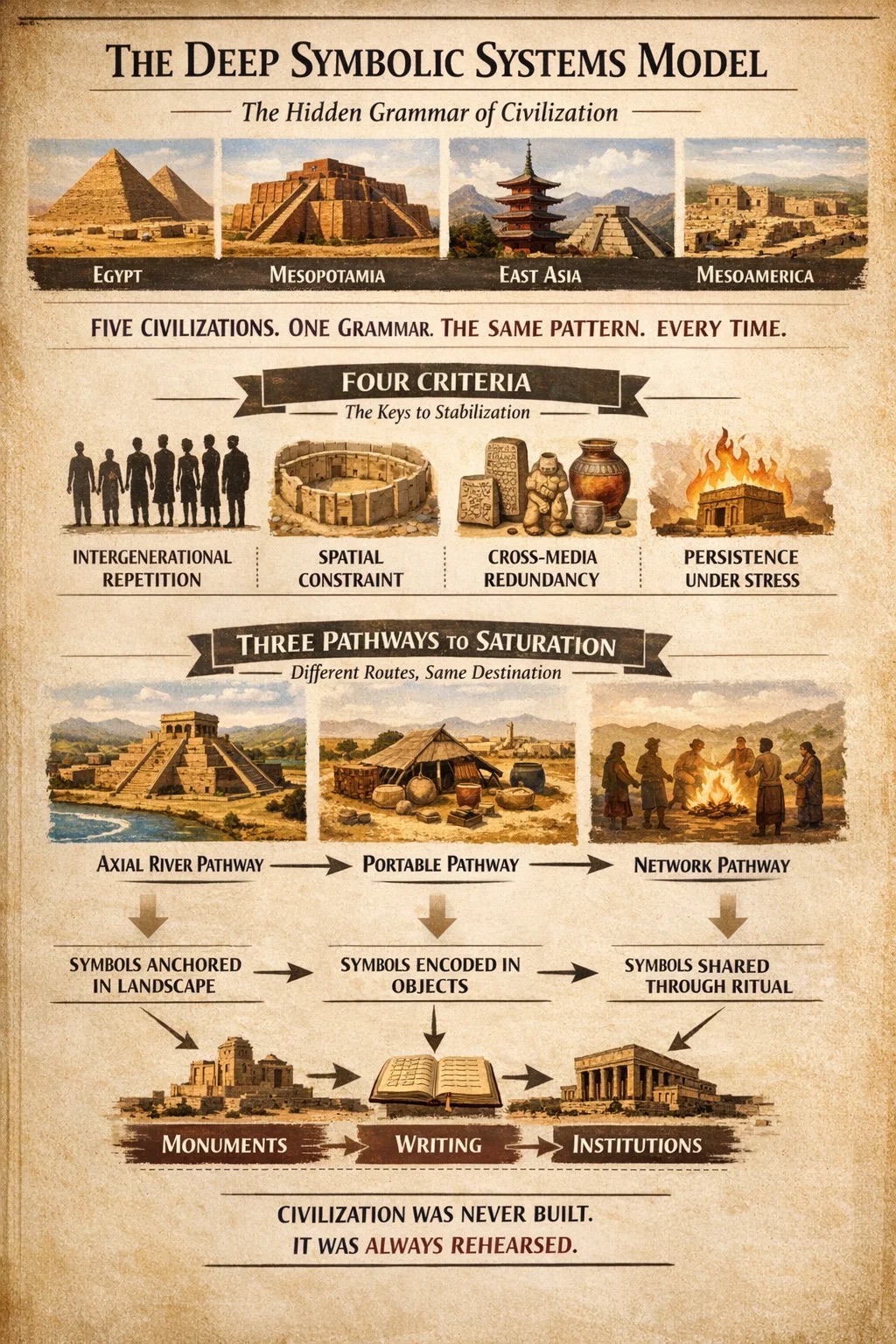
DSSM Overview
Framework
The Deep Symbolic Systems Model
DSSM for Beginners
Framework
DSSM for Beginners
Global Synthesis
Framework
Global Synthesis
Cognitive Preconditions
Deep Background
Cognitive Preconditions
Neural Evolution
Deep Background
Neural Evolution & Symbolic Stabilization
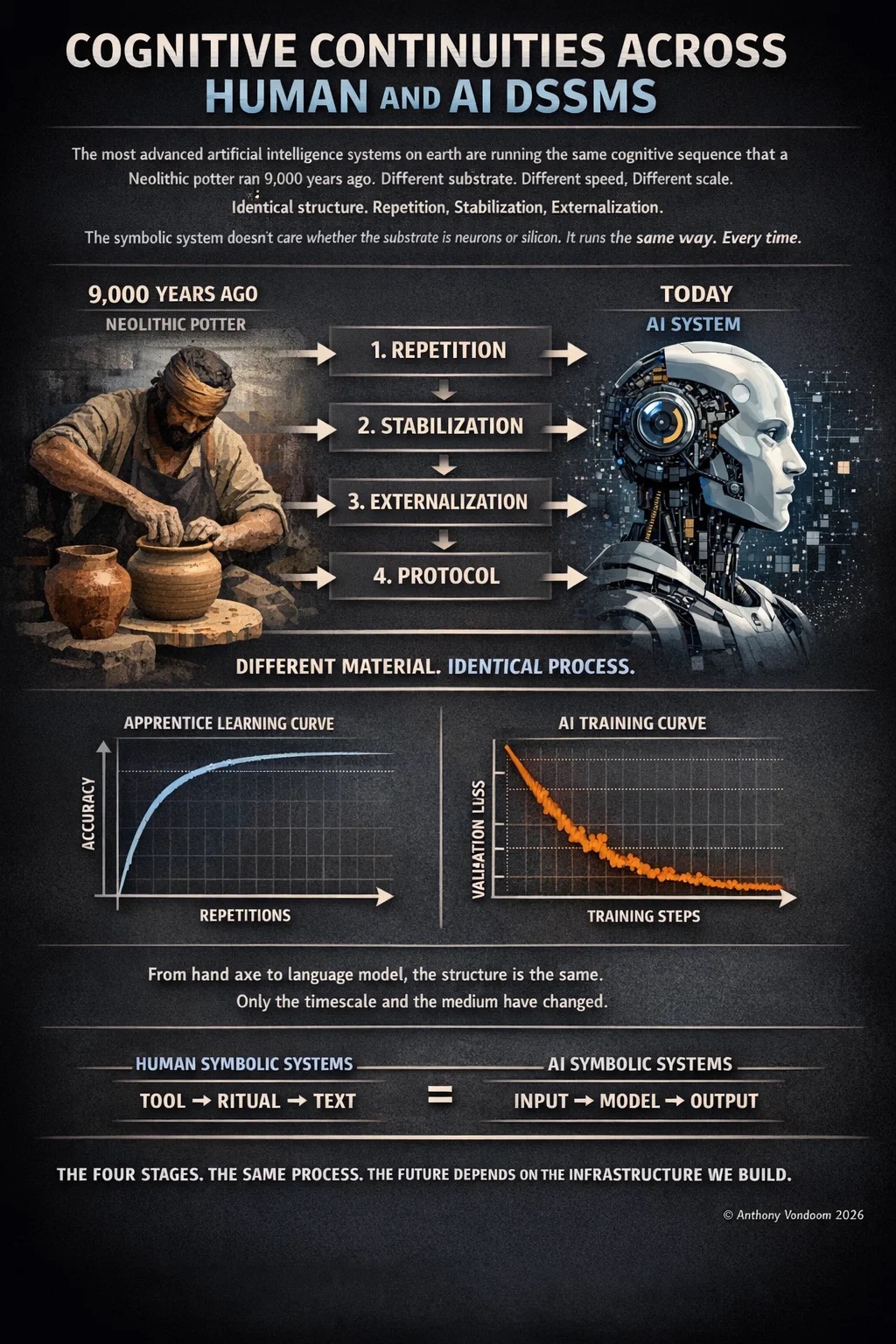
Human and AI DSSMs
Deep Background
Human & AI DSSMs
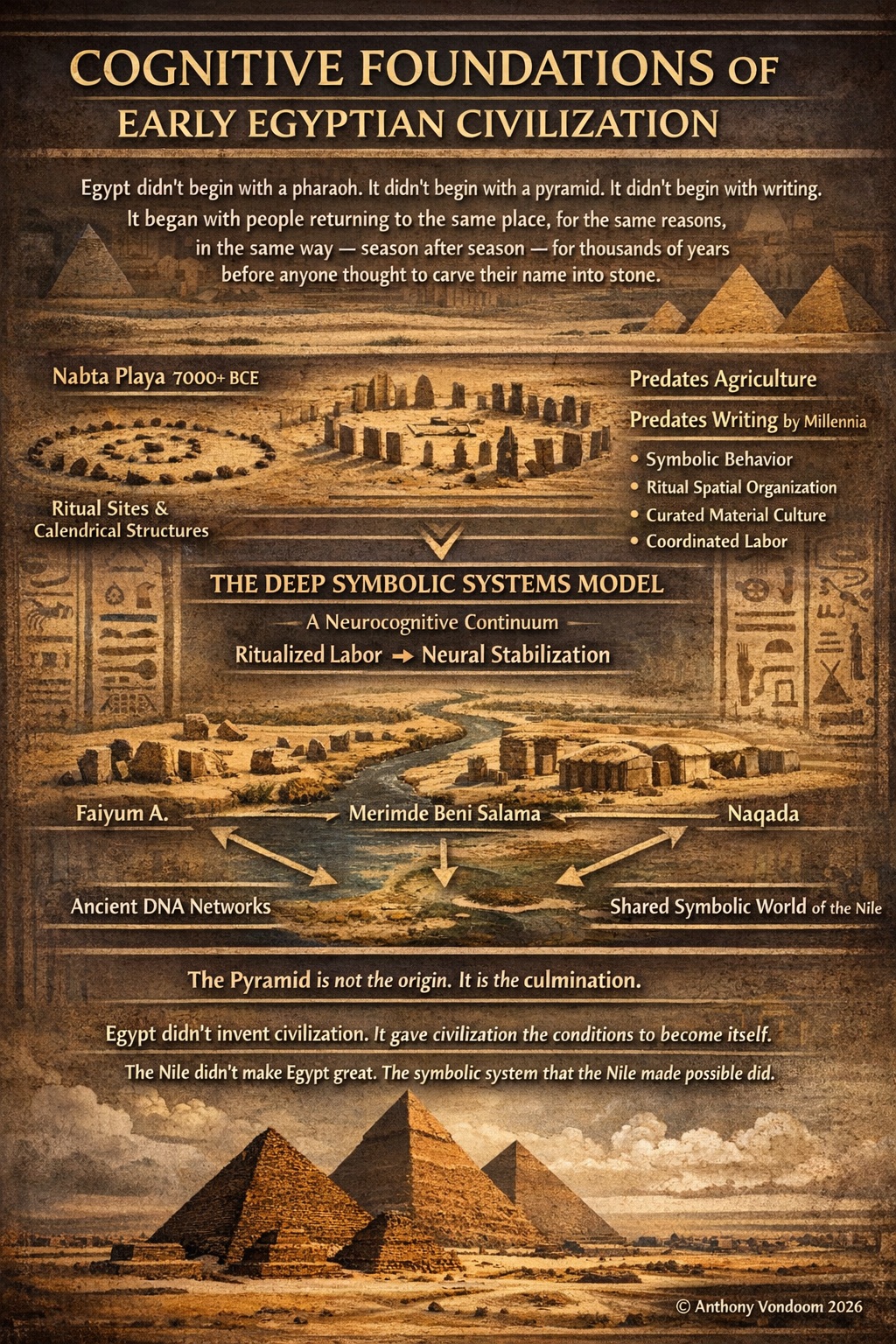
Egypt
Civilization
Egypt
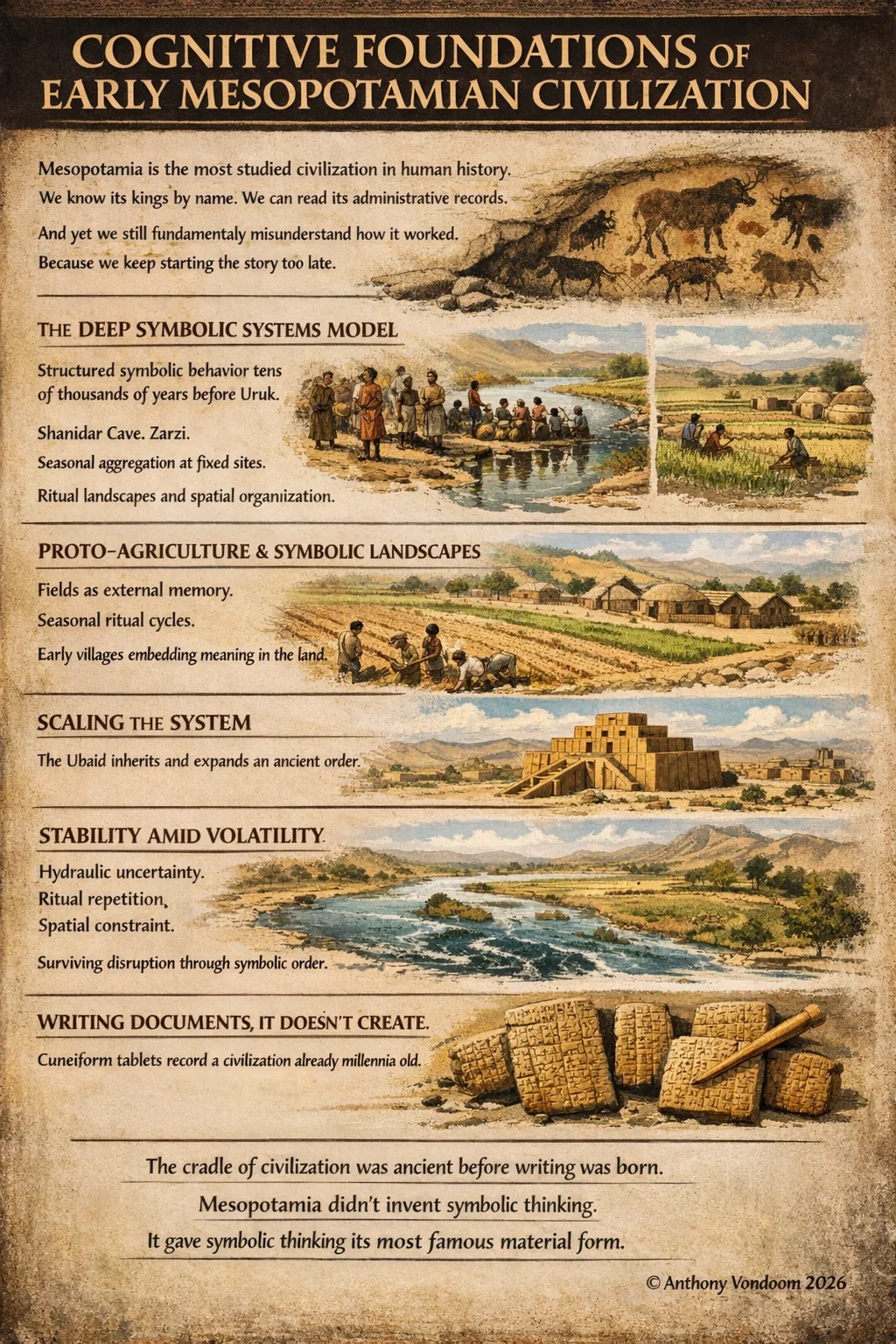
Mesopotamia
Civilization
Mesopotamia
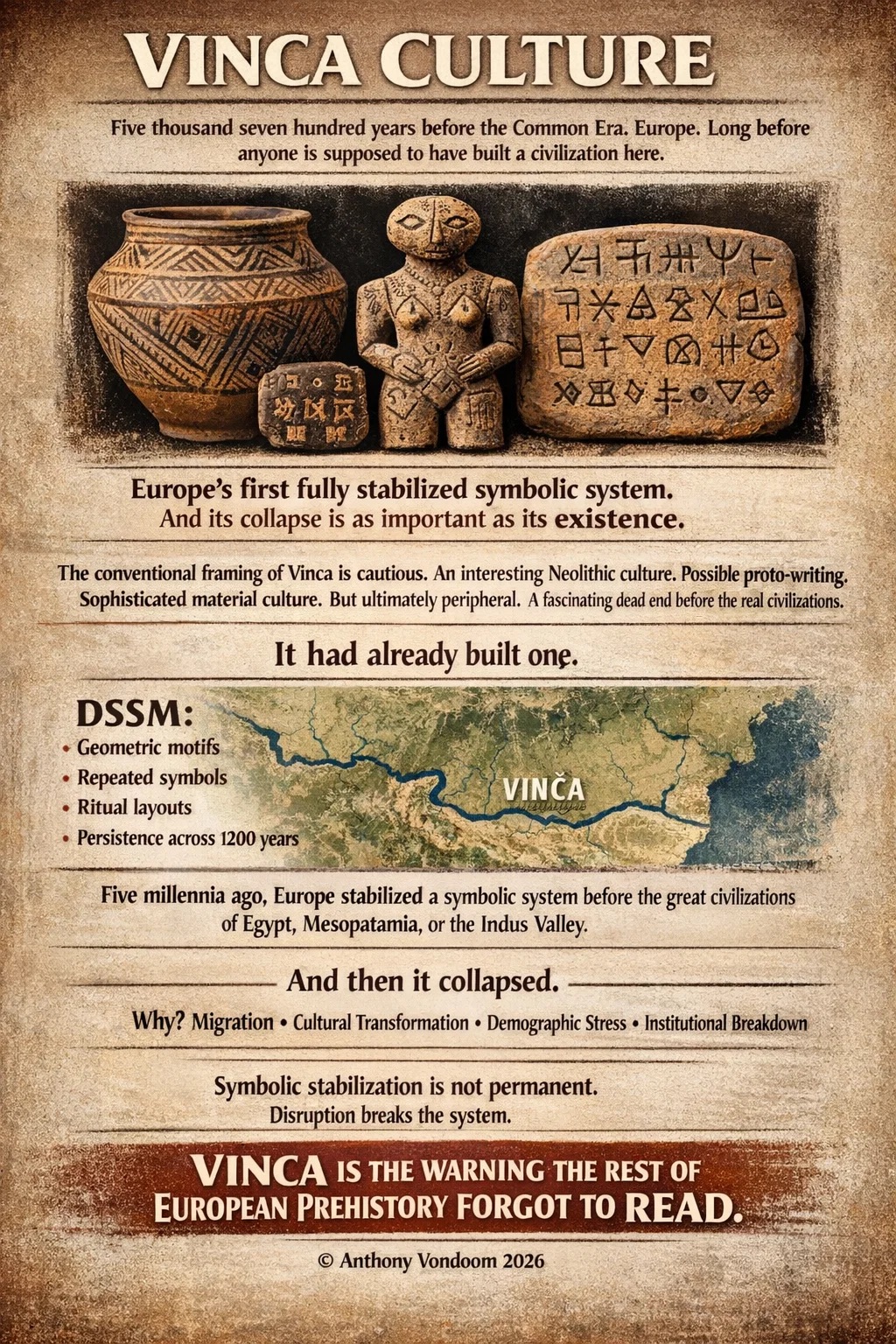
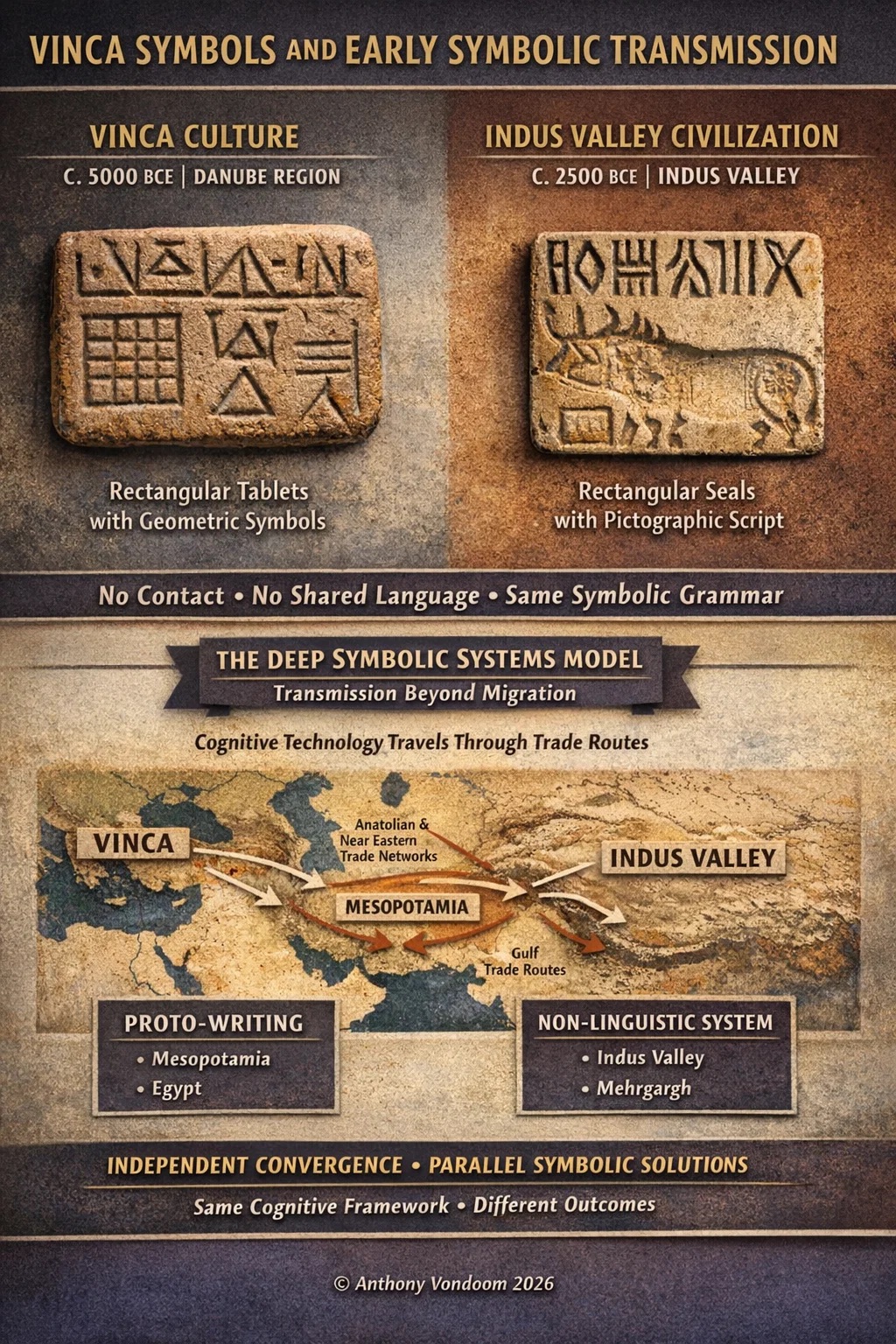
Vinca Culture
Civilization
Vinca Culture
Vinca Symbols
Civilization
Vinca Symbols
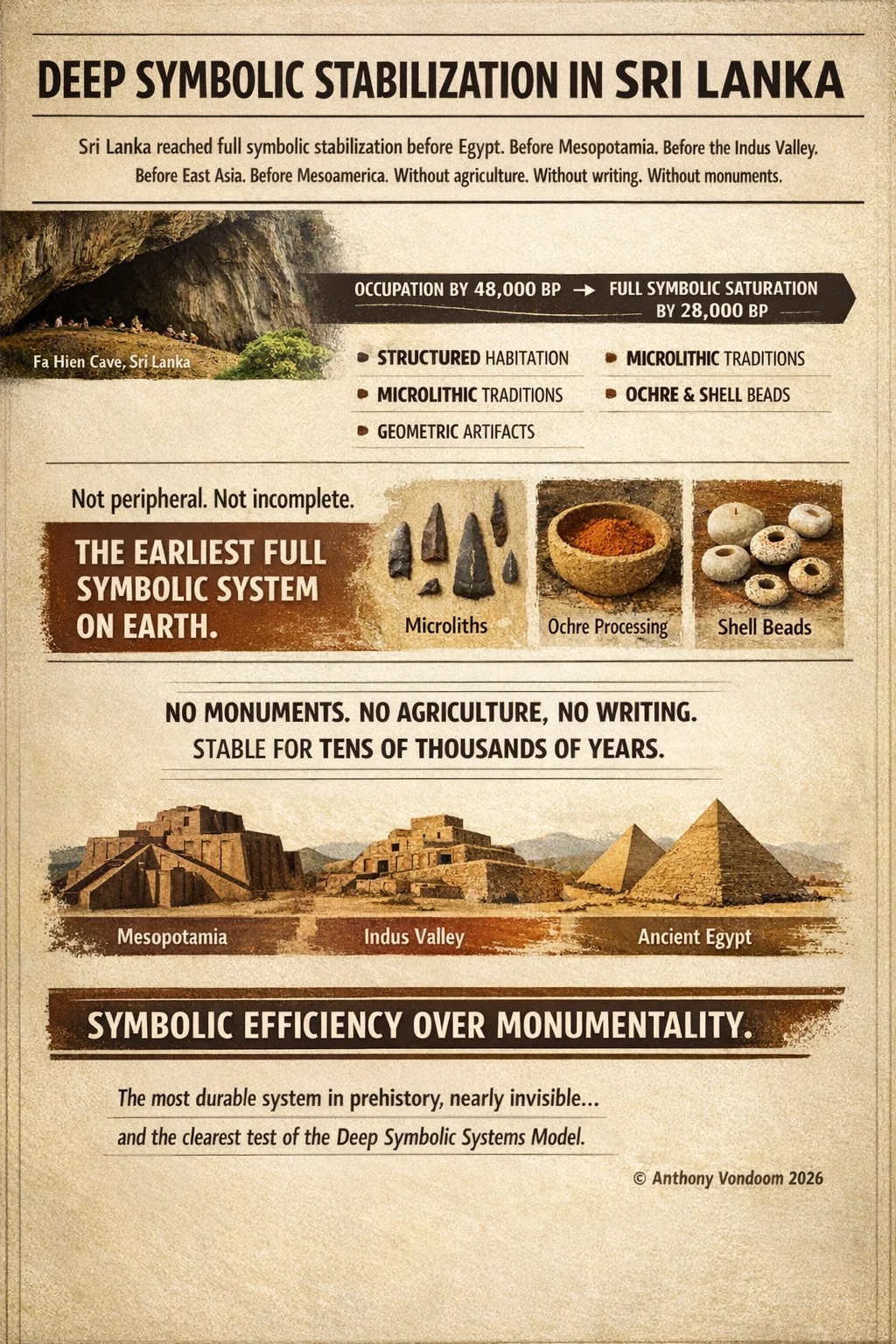
Sri Lanka
Civilization
Sri Lanka
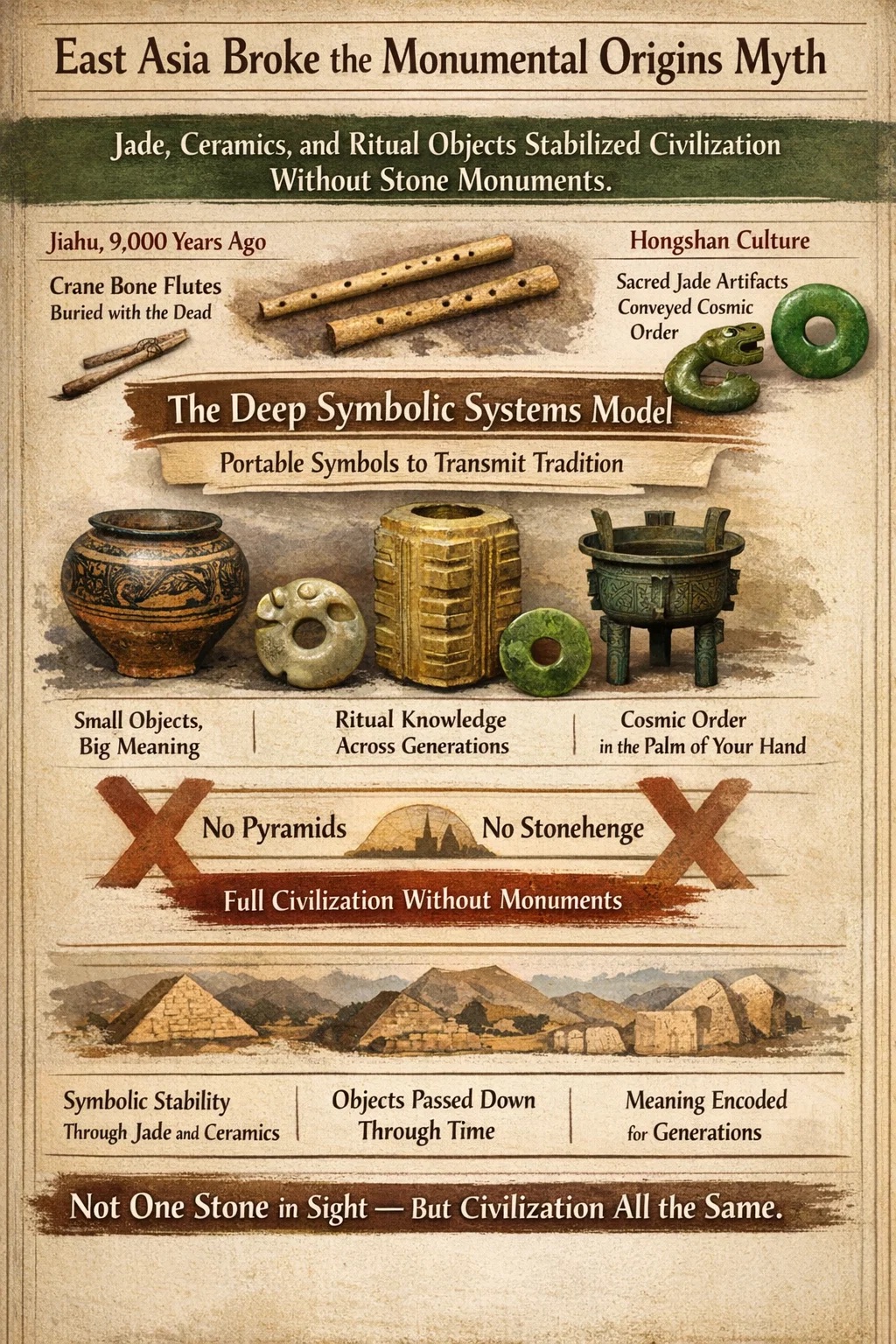
East Asia
Civilization
East Asia
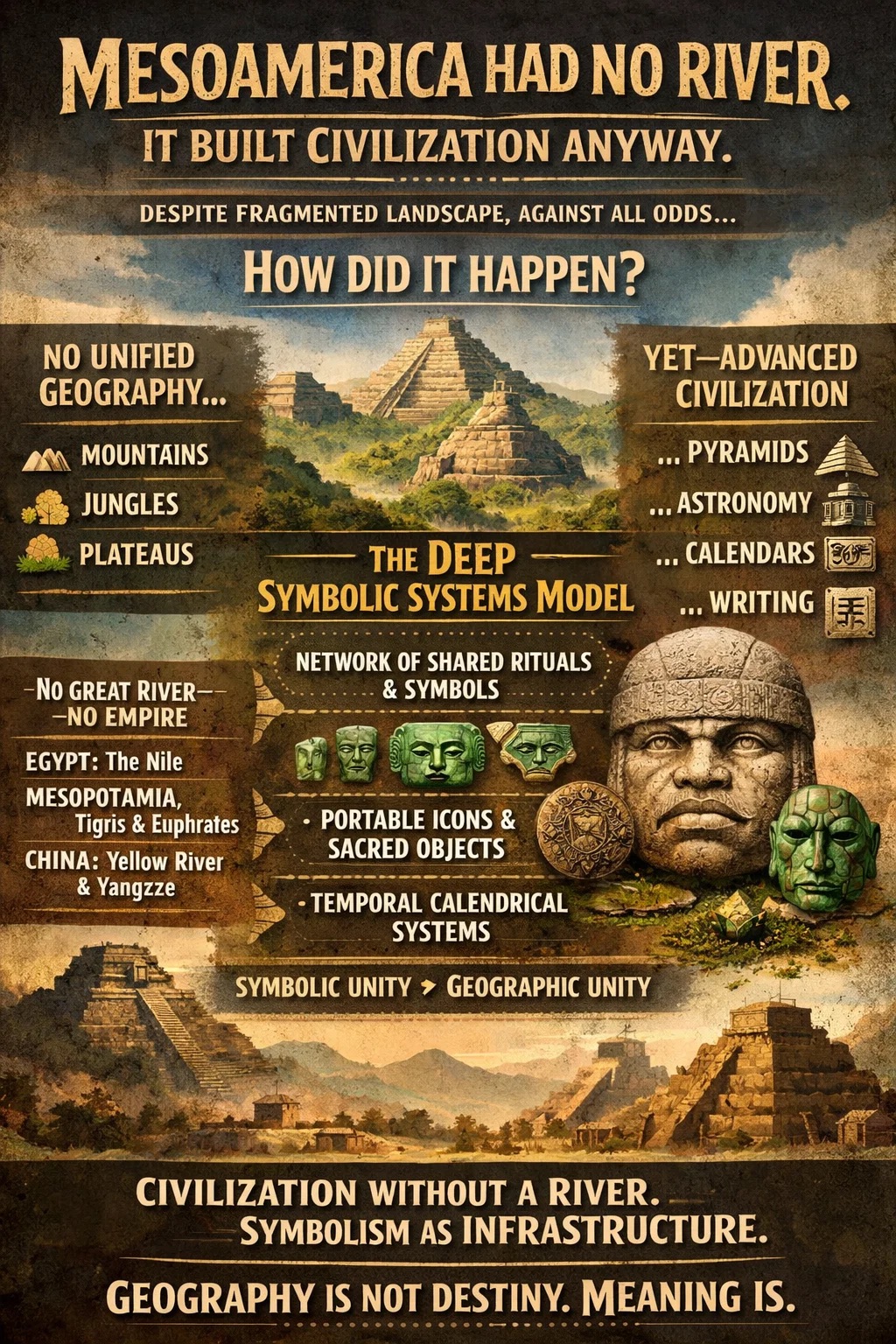
Mesoamerica
Civilization
Mesoamerica
Indus Valley
Civilization
Indus Valley
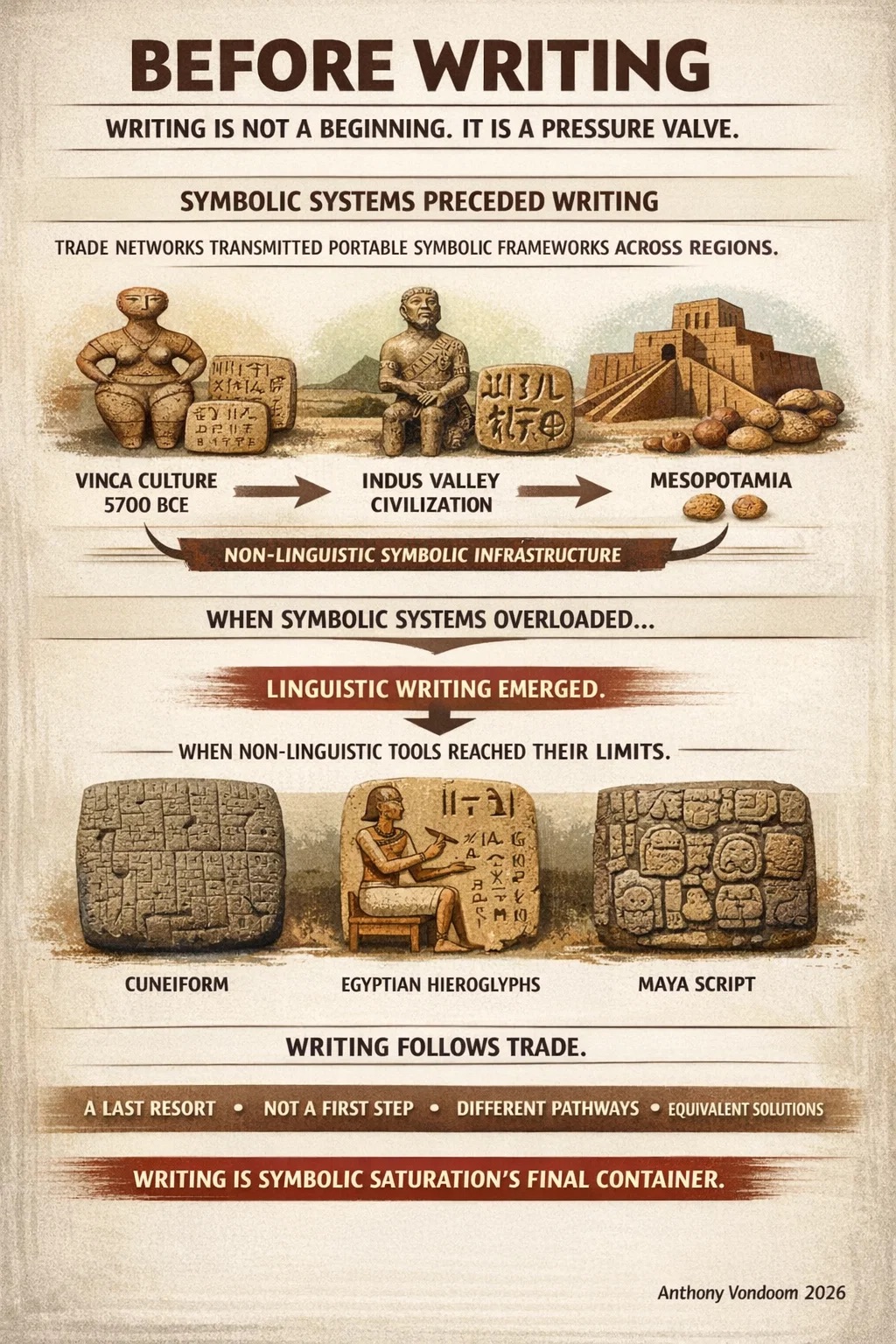
Before Writing
Concept
Before Writing
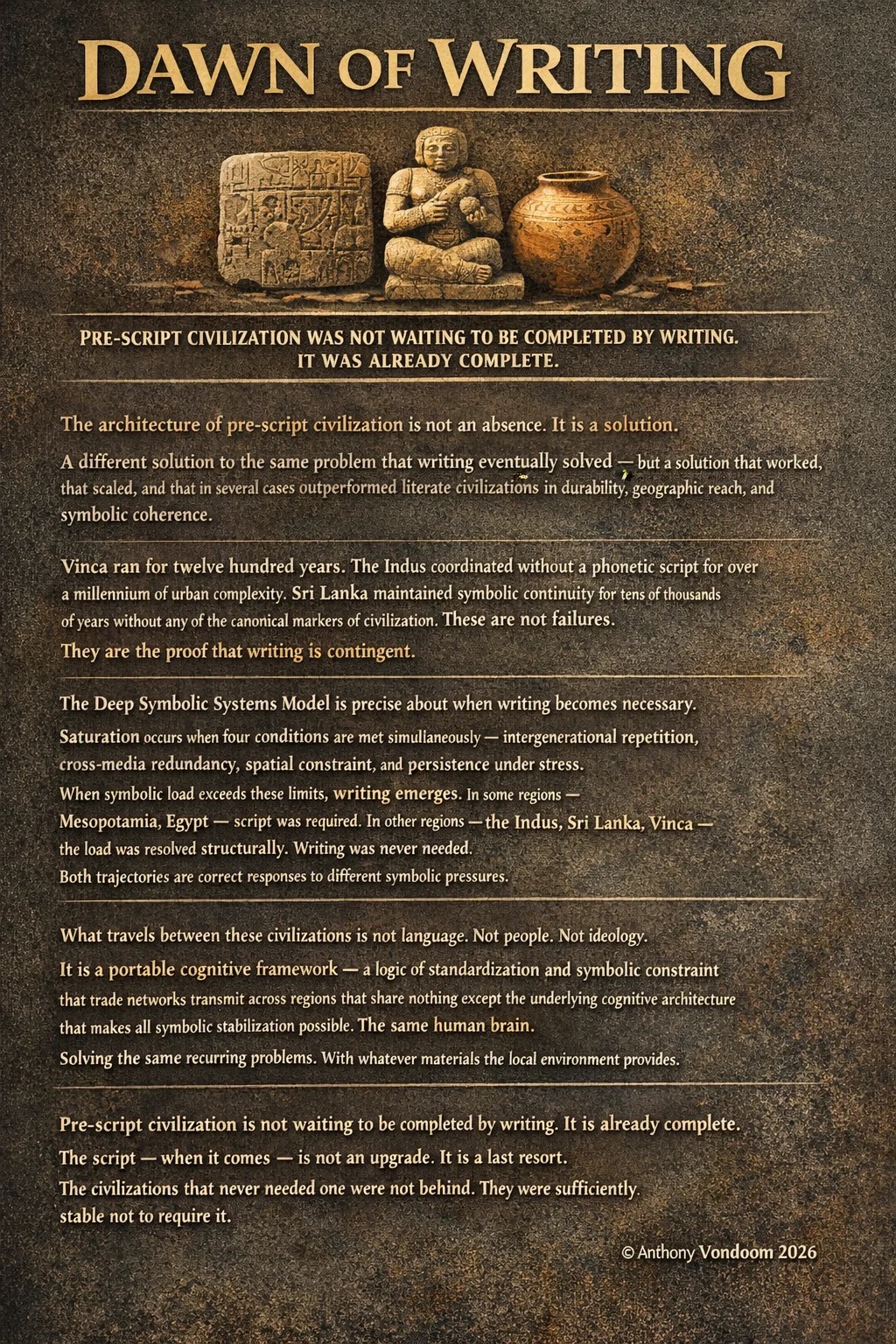
Dawn of Writing
Concept
Dawn of Writing
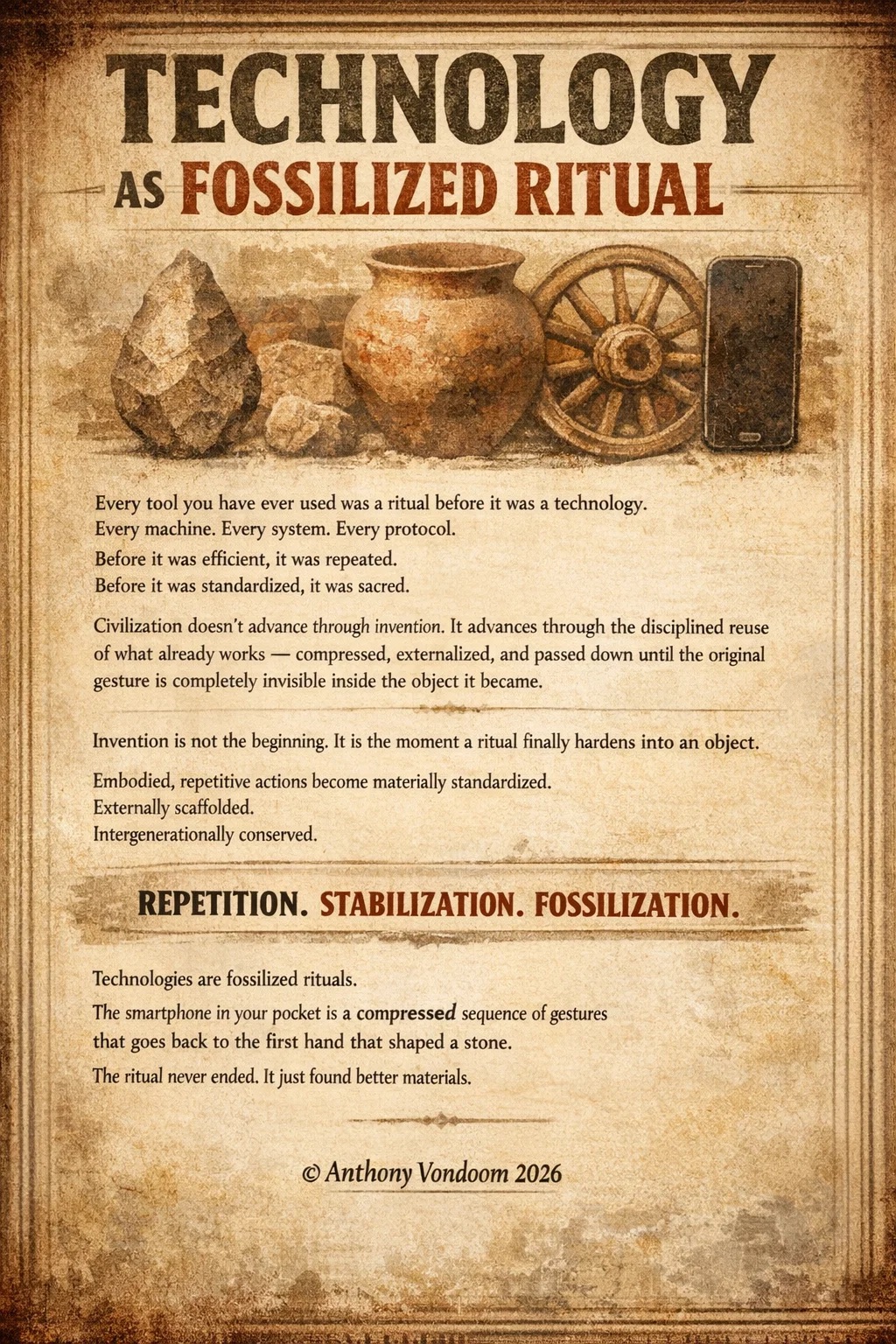
Technology as Fossilized Ritual
Concept
Technology as Fossilized Ritual
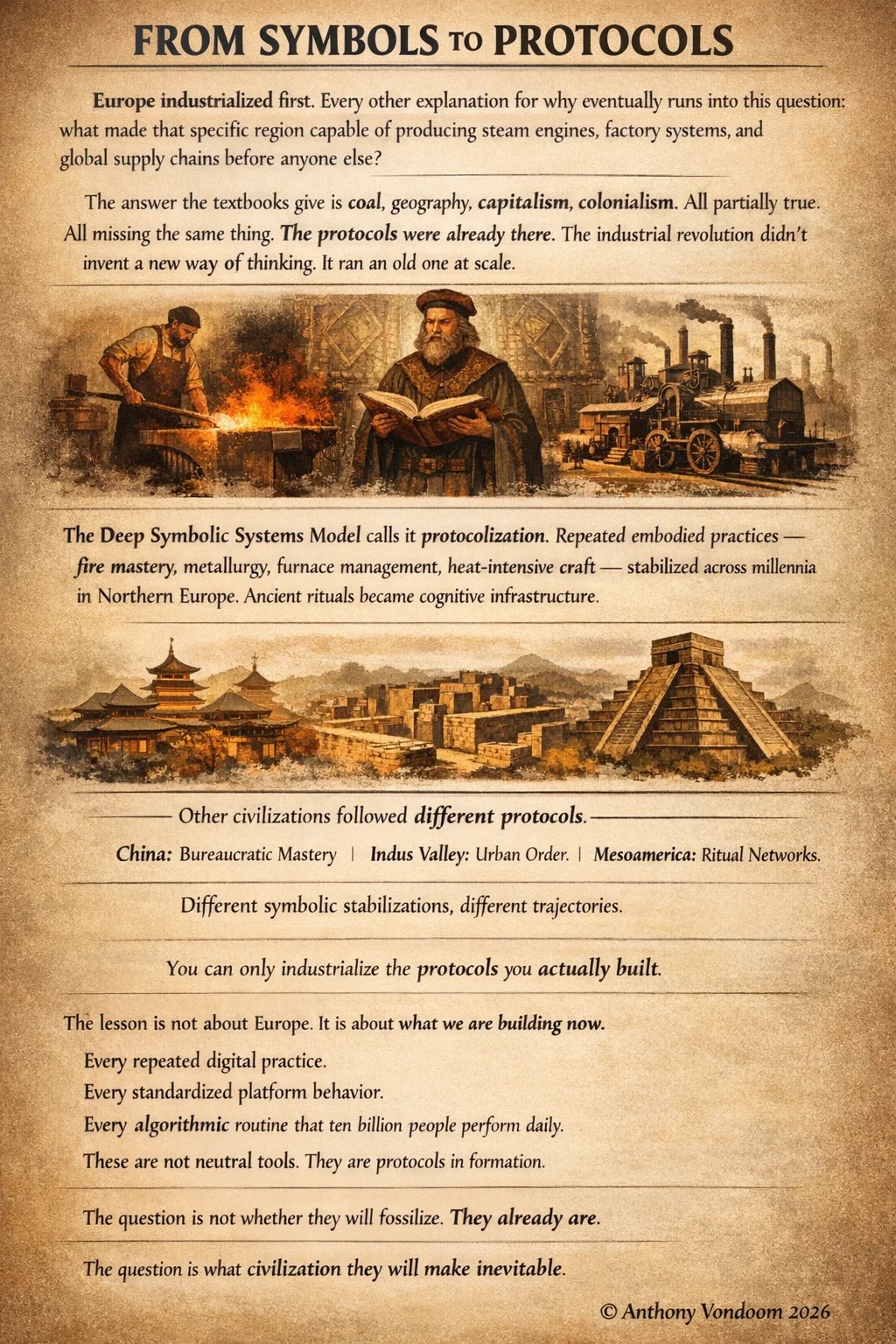
From Symbols to Protocols
Concept
From Symbols to Protocols
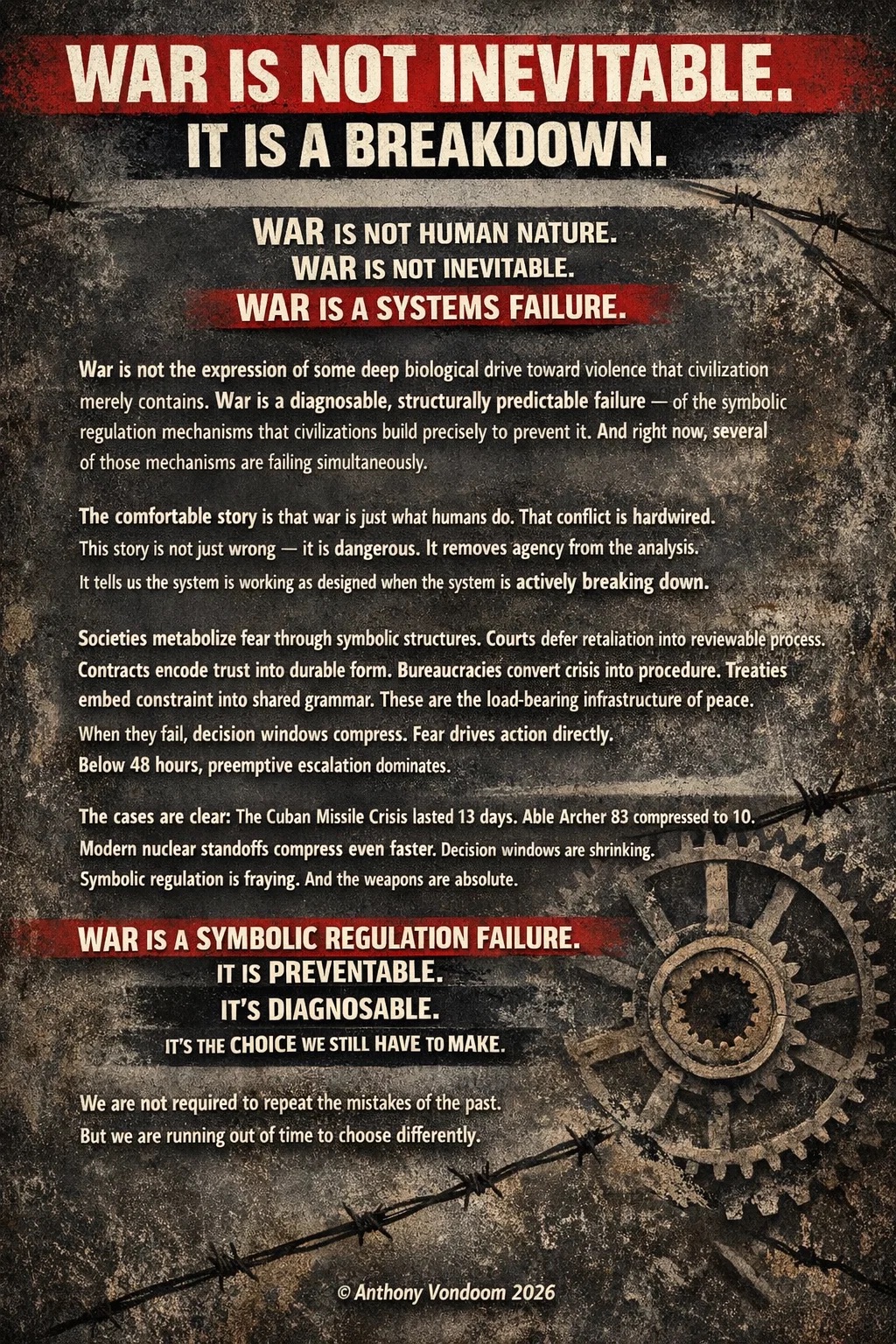
War is Not Inevitable
Concept
War is Not Inevitable
06

The Corpus

50+ papers distributed across open-access repositories. All works disclose AI-assisted synthesis. All intellectual content, interpretations, and conclusions are solely those of the author.

Author: Anthony Vondoom  ·  Independent Researcher  ·  ORCID: 0009-0003-4953-1427